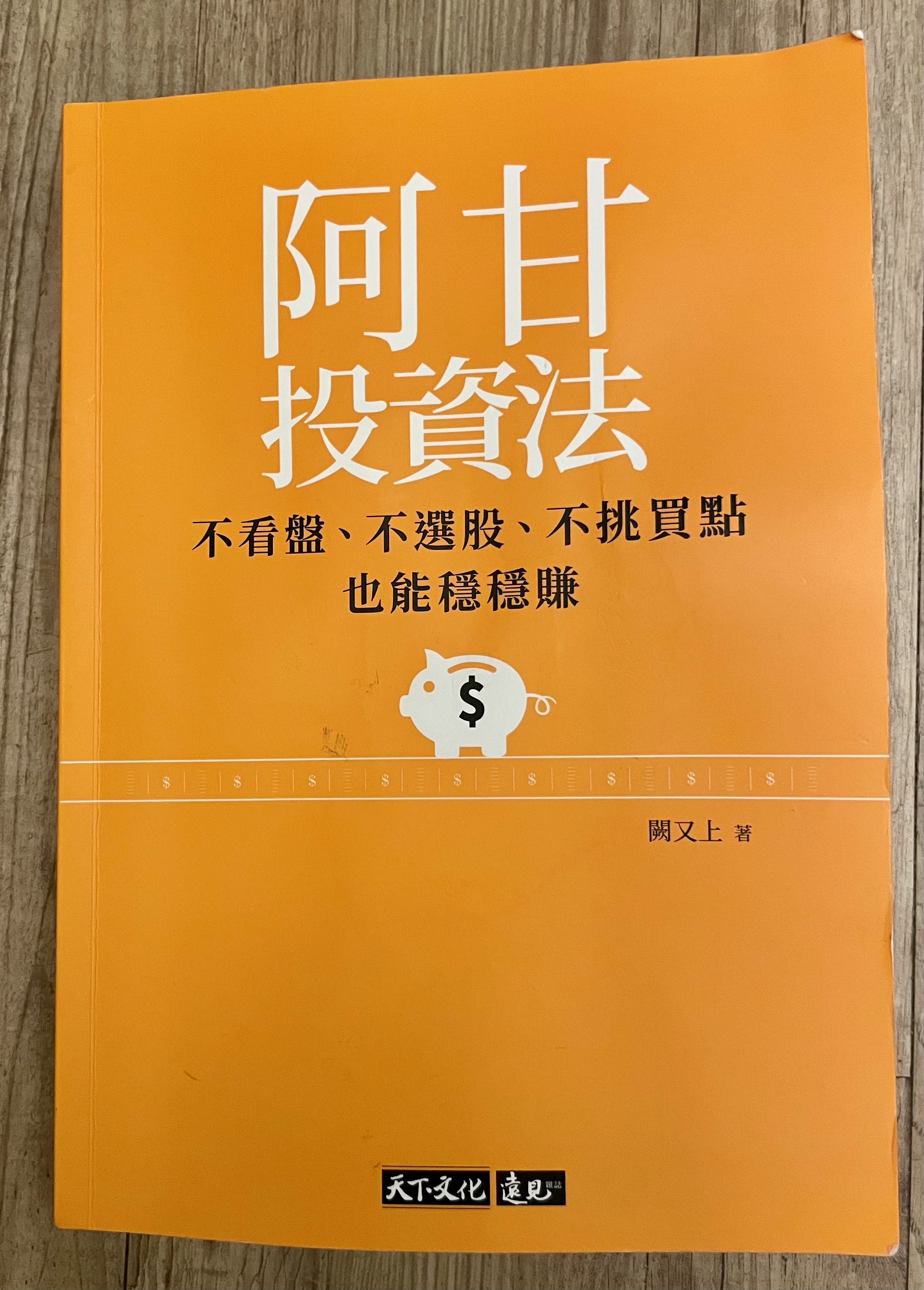
I remember about three years ago, when I was a complete stock market beginner. Right after learning about the Taiwan stock market, I jumped straight into trading. My first stock was CTBC Financial Holdings (2891) — I still remember the ticker clearly. But watching the daily ups and downs was nerve-wracking, and I eventually couldn’t take it anymore and sold. Fortunately, I made a tiny profit — enough for a lunch box — rather than losing money. That was lucky indeed. Then, by chance, I came across “The Forrest Gump Investment Method,” which launched my journey into index investing. Today, I’d like to introduce this book.
Together, let’s skip chart-watching, stock-picking, and market-timing — and still earn steadily!
Understanding the True Nature of the Market
The Stock Market Trends Upward Long-Term
Why does the stock market trend upward long-term? It’s an interesting question, though the book doesn’t explicitly explain why. After some research, I believe these are the main drivers of long-term stock price growth:
Inflation: The US Federal Reserve believes 2% annual inflation is beneficial for the economy. If prices rise 2%, shouldn’t stock prices also rise about 2%?Population growth: More people means a bigger market. As population grows over time, businesses need to supply more goods to meet market demand, earning more profits.Technological progress: Technological advances push human productivity to new heights, thereby increasing total output. Check out Buffett’s 2016 shareholder letter, from the bottom of page 7 to page 8, where he explains how technological progress has boosted production efficiency and total output.
It’s important to note that “long-term upward trend” refers to the overall market, not individual stocks.
I know everyone’s too lazy to read the shareholder letter, so here’s the translation:
American GDP per capita is now about $56,000, six times what it was when Buffett was born. Yet today's American citizens are not smarter or working harder than before — rather, they've become more efficient, producing more output. This powerful trend will certainly continue.
Lows Before Highs
While the stock market trends upward long-term, it’s not always at highs — nor always at lows.
The book uses pendulum theory to illustrate: a clock swings from left to right, covering two extremes in a short time. Interestingly, this experience frustrates investors, especially when swinging from high to low, leading them to “buy high, sell low” — resulting in net losses over time.
I personally prefer Kostolany’s dog-walking theory: The owner is walking, and the dog runs back and forth ahead, sometimes running too far, but eventually returns to the owner's side. Think of it this way: if the market trends upward long-term, the owner represents the market, and the dog represents volatility. The dog runs up and down wildly, but over time, it follows the owner toward a destination. What destination? Going up.
No Chart-Watching, No Stock-Picking, No Market-Timing
After seeing through the market, you’re probably thinking — isn’t this just index investing (buying the broad market)? That index investing stuff doesn’t work! But did you know? Buffett’s annualized return from 2003 to 2019 was 9.47%, while the S&P 500’s annualized return was 10.15%. This means you could do absolutely nothing and easily beat Buffett. Even if you underperform Buffett, the gap won’t be too wide. This means we can focus our energy on our careers through index investing.
If the stock market trends upward long-term and has a high probability of beating Buffett, what should we do to build wealth in the market?
Trade Time for Financial Freedom
If you spend a lot of time dreaming about climbing Mount Everest or becoming a martial arts master, those skills are only suitable for people with such ambitions and conditions — it's not a good path to wealth for most investors. Simply put: don’t dream of getting rich overnight. Instead of fantasizing about instant wealth, spend time figuring out how to grow your snowball (capital). Buffett spent 20 years rolling his wealth. Can you spend 20 years deeply researching the stock market with Buffett-level skills and opportunities? If not, just spend 20 years investing like Forrest Gump (index investing).
Investment Doesn’t Require Perfect Timing
The stock market fluctuates. You don’t need to nail the exact bottom — just go all in. Check out:
- Dollar-cost averaging is destined to lose money — go all-in at market highs
- Lump sum or staggered entry at market highs? Dollar-cost averaging in bear markets loses money
Let World-Class Entrepreneurs Work for You
Society has shifted from normal distribution to power law distribution — the era of the big getting bigger has arrived. If we’re not that smart, why not buy their shares and let these big companies work for us?
Asset Allocation
Asset allocation here basically means the ratio between stocks and bonds.
Asset allocation is crucial. When young, you can allocate more to stocks and take on more risk. But as you age, you may need to increase your bond or cash position to protect against black swan events that could dramatically reduce your stock portfolio’s value and make your retirement journey bumpy.
Reflections
The key points of this book are in the first two chapters — you can basically close the book after those. The main points are what I’ve summarized above.
After being influenced by this book, I’ve fully converted to index investing. Although this year’s stock market returns don’t look great — the drawdown even hit -20% at one point, watching my account balance shrink day by day! But market volatility hasn’t kept me up at night. In fact, the more it drops, the happier I am — because I can buy stocks at cheaper prices. I’m also grateful for this book’s inspiration, turning me into an index investor so I can focus more on my career without worrying about investments.
You might think: what about long-term bear markets? Index investing takes years to see returns — how can I see results in a limited time?
If you don’t need the money short-term, consider investing in yourself. Within months, you’ll see rapid personal changes and growth, which raises your own value. Isn’t that an even better investment?
Finally, if you don’t want to read the book, I discovered it’s been turned into an online course: The Forrest Gump Investment Method.
If you want to learn more about index investing, I recommend:
Wishing everyone smooth sailing on their investment journey!
Feel free to leave a comment on my blog. Your feedback motivates me to keep writing. Thank you for reading, and let’s grow together to become better versions of ourselves.
If you’re interested in US stock investing, consider using Interactive Brokers! Use my referral link and we’ll split the bonus: https://ibkr.com/referral/renjie724