Alan Zhan Blog

Live for nothing, or die for something

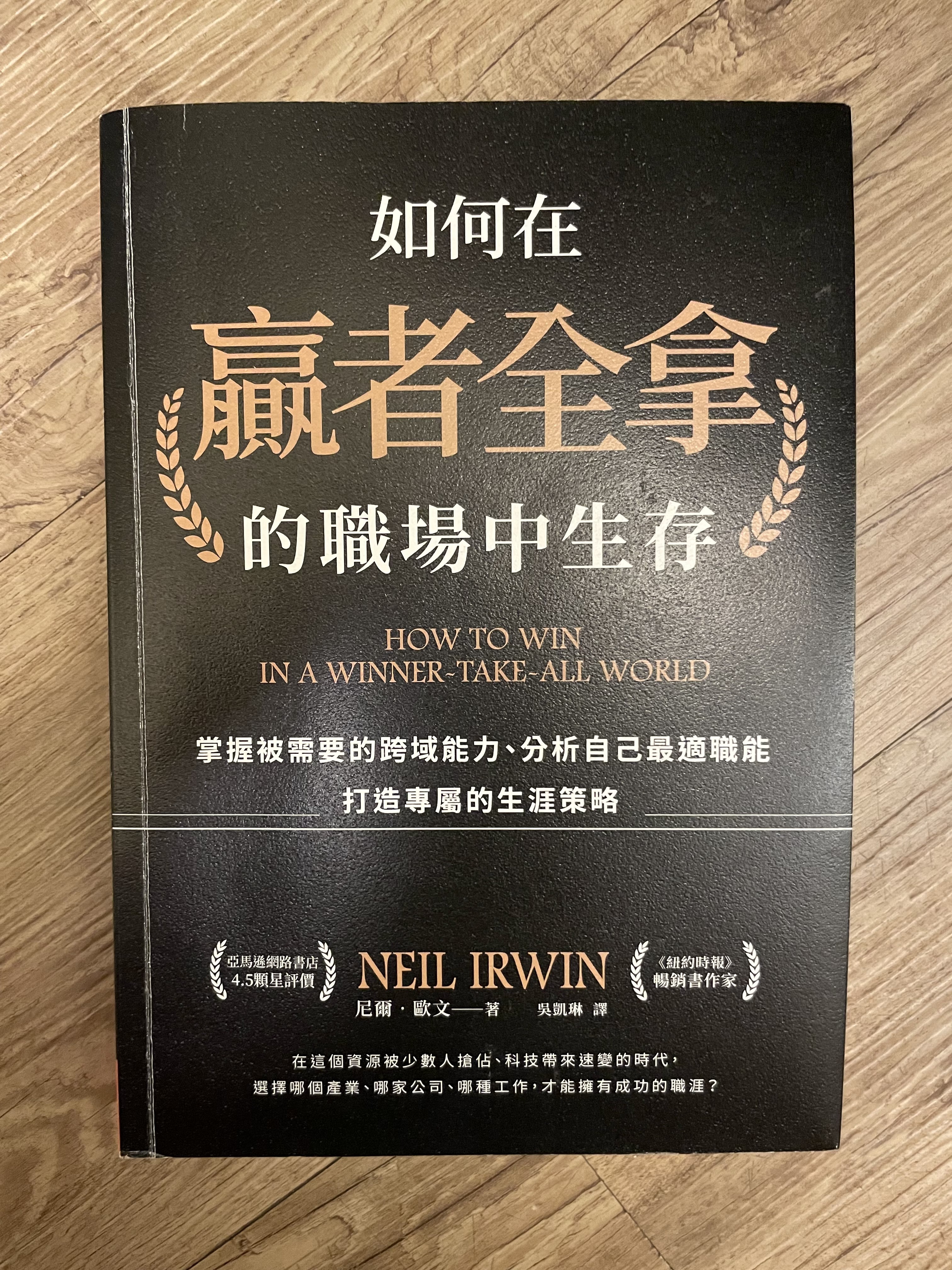
“Winner takes all” — the meaning is pretty clear from the phrase itself, and it happens constantly in our lives. Here’s a simple example: in a democratic society, there’s a presidential election every few years. Only the candidate with the most votes wins and becomes the next president — second and third place seem far less important. In romance, every man can pursue their dream partner, but ultimately only one wins. On the sports field, in companies, everywhere — most scenarios are winner-take-all.

To prevent the monopolistic effects of winner-take-all dynamics, most countries now have antitrust laws. A classic case: Rockefeller, through sheer determination and strategy, built a massive oil empire from scratch. By 1880, 95% of all oil produced in the United States was monopolized by his Standard Oil Company.

So how do we become winners?

Winners Take All

Essential Skills for Today’s Professionals

Cross-Domain Communicator

In modern society, the companies driving the economy are extraordinarily large. Because of this scale, they need more talent and more advanced technologies. But how do these diverse talents communicate with each other? You need someone who can move between different domains — a “glue person” who orchestrates a beautiful symphony.

Become an In-Demand Talent

First, ask yourself: what combination of skills is most valued by the market? Then start developing the skills you lack, transforming yourself from a buyer into a seller.

If you don’t know what the market values or where it’s heading, regularly check what capabilities leading companies are looking for in their talent.

Leverage Data

Maintain an open attitude, transform collected data into useful information, use that information for statistical analysis, and continuously optimize yourself and your team.

Career Planning

Career paths have evolved from career ladders to career lattices — meaning non-linear advancement.

When evaluating a job, don’t just focus on promotion opportunities. Consider whether the job lets you gain diverse abilities and experiences. Moving between departments or even taking a lateral move to gain varied abilities and experiences is also a great choice.

Treat each job as if it has a two-to-four-year term. Deliberately give yourself a “three-year itch”: year one is for learning, year two for making changes, year three for demonstrating your value.

Establish what matters most in your career, then work backward from your end goal to achieve your life objectives.

Choose Jobs Like Investments

Choosing a job is like investing — not every investment style suits everyone. Just as you’d use different strategies for different types of stocks, you’ll need to make necessary trade-offs when choosing different types of companies.

  • Growth type:
    • Star companies leading industry trends with well-established management systems and stable income.
    • Risk of being confined to a narrow domain.
  • Venture type:
    • At startups, cash compensation is typically lower, and stock compensation carries higher risk.
    • Startups usually lack bureaucratic structures.
  • Value type:
    • Value companies might also be turnaround situations, full of both risks and opportunities.

Modern business operations have also changed — freelancers and contractors are increasingly common. This means you don’t have to choose one of the three company types above; you can also choose to be a freelancer or contractor.

We must evaluate our personality, risk tolerance, and other factors to choose what suits us best.

The Post-Loyalty Era

The modern workplace is no longer about lifetime employment — that mindset is outdated. We should learn from the relationship between professional athletes and their teams — these relationships are finite. Applied to us and our companies: when team needs and employee capabilities or career plans no longer align, the relationship should end. The employer-employee relationship has shifted from a marriage to a series of romantic relationships.

When you reach a career turning point and must decide whether to stay at your current company or accept another opportunity, always follow two principles: honesty and reciprocity.

Reflections

So how do we become winners? Don’t think about winning — think about not losing! Life can’t always be smooth sailing, and you can’t win forever. Only through openness, flexibility, continuously embracing new knowledge, and proactively changing yourself can you overcome every challenge.

I’d personally recommend this book to anyone feeling lost in their career — after all, I’ve been there too.

Looking at it from another angle, you don’t necessarily have to be a winner. On life’s journey, you can still live happily, right? So who do you want to become?

Feel free to leave a comment on my blog. Your feedback motivates me to keep writing. Thank you for reading, and let’s grow together to become better versions of ourselves.